
- What are the potential risks and rewards of the latest demand gen offerings?
- How do you integrate new tools with traditional demand gen activities?
This ITAC Marketing Think Tank was hosted at Cisco Canada in Toronto, Ontario by Paul McDevitt, Senior Manager, Marketing. The discussion was moderated by Bob Becker, Principal, SMA.
What We Learned
- Develop and enforce social media (SM) corporate guidelines before SM activities grow. Integrate all your SM tools and ensure communication lines are open among everyone in the organization who deploys SM. Strive to achieve internal consistency
- Use SM for new, unique and engaging communication. Consider including two-minute videos as part of multi-touch engagement. Ensure your content is concise and relevant – especially when tweeting!
- Assess your campaign success through how well it fits with your customer’s purchasing cycle — not how it fits with your own corporate defined cycles
- Learn about marketing automation tools such as Eloqua and how it can enhance SM activities

 Attendees
- Bill Charters, President and CEO, Sunrise Solar
- Brent Colson, Marketing Manager, Eastern Canada, EMC
- Jacqueline Davis, Senior Manager, Global Demand Programs, Amdocs Canada Inc.
- Shimrit Frenkel, Marketing Director, NCI Secured Intelligence
- Amy Hall-Cummings, Independent
- Chub Letenyei, Senior Field Marketing Specialist, OpenText Corporation
- Douglas Long, Director, Strategic Marketing, Applanix
- Paul McDevitt, Senior Manager, Marketing, Cisco Canada
- Kimberly Panini, Manager, Vendor Relations & Marketing, Blair Technology Solutions (BTS)
What activities did you stop doing, or scale back on, when you engaged in social media?
- Not necessary to stop certain activities, better to modify marketing mix. For example, outbound cold calling used to be conducted at the start of a campaign. Now, to identify interest, it is done at the end as a follow-up
- Cut down or stop trade shows:
- send a select few representatives instead of setting up a booth
- consider quality versus quantity — conduct user group events instead
- focus on pillar trade shows; 1 to 2 “must-attend” networking trade shows per year
- hire a small agency to assist/manage SM activities
- Start-up companies continue traditional marketing to help create their brand
- Print ads have stopped — such as in IT Security publications — difficult to measure
- Stopped tier one city campaigns and shifted focus to tier two cities
- If still experimenting with SM your challenges will vary, for example you have to:
- develop appropriate SM content
- limit the amount of actual product marketing you do via SM – know your audience
- integrate all your SM tools
- define your SM target market – it’s not simply about number of hits
- integrate SM into your existing marketing campaigns
- many B2C successes, but not much B2B success with SM
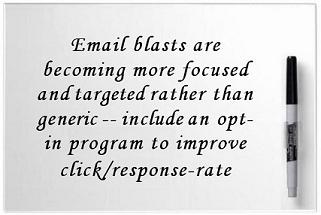
How do you evaluate SM tools? What method do you use to select one over another?
- Multiple touch points are needed to bring prospects/clients along a successful SM journey — so you need more than one SM tool
- Determine the journey you want to take your customers on as they go through the purchase cycle
- People want instant results; it’s a tough balance
- Make SM activities “interconnected”
- Nurture prospects and clients from the initial SM entry point right through the cycle
- Select a few SM tools and successfully execute them – consider Twitter and a blog. Then explore other SM tools
- Blue Ocean Strategy — go where no one has been yet; be an early adopter on what is “trending”
- What is a platform? What is a tool? Know the difference
- Look at your SM tools’ back-end system — what information can you obtain?
- If they don’t integrate with “Eloqua” for example, it may not help your SM activities. Determine your premier partners (e.g. MarketOne, Bulldog Solutions, Relationship One)
- Before selecting a SM tool, re-evaluate the push and pull
- Consider where your prospects/clients get their information. Where are they connecting?
- Go back to marketing 101 and see how SM fits
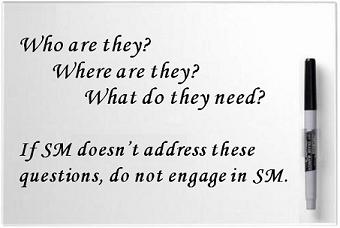
How do you address the challenges of content for SM? Do you engage external resources?
- Stopped Director-level target; focus is now towards the C-level executives
- Do not use the same content through all SM – same for traditional media
- Make content fit with corporate message and branding; how is that content driving the sales pipeline?
- After content is developed, the next challenge is how to disperse it, LinkedIn? Twitter? — how to slice and dice
- Learn where your audience is and what SM platform they are using
- If you outsource SM, you still own the content
- Change is daily; today’s challenge may be not tomorrow’s
- Become customer and marketer at the same time in an effort to manage challenges
- Learn how your target market consumes your content
- Consider a rich media-based communications, such as a short 2-minute video to enhance marketing, training, or knowledge challenges
- Address pain points and specific customer issues
- Think about an interactive white paper — make it more enjoyable by being available in smaller chunks
- Create something more credible then a brochure. The white paper is the ‘new brochure’. The brochure is slowly becoming redundant. Do an A vs. B test — send a white paper and send a video and see which is preferred
- Prospect is now more educated. Message needs to be at a higher level
- C-Level more likely to enjoy sound bites, tech managers more likely to enjoy white papers
- Plan and delegate SM content to avoid being overwhelming. Consider one topic per person
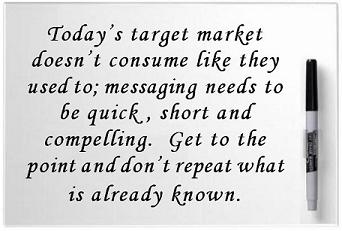
How do you integrate and manage SM strategies with sales?
- Internal branding needs to be as “exciting” as your corporate external brand
- To improve internal brand – have your sales team on board with SM lead gen process — will they be excited with the leads forwarded?
- Marketing and sales need to engage with and without SM
- Prepare sales for what is coming in; define lead gen guidelines and parameters, and how to react
- Encourage SM and be supportive to sales
- Build credibility by showing empathy with sales

Technology Marketing
& Sales Group