
This ITAC Marketing Roundtable was hosted at the MaRS Centre, Toronto, Ontario. The discussion was moderated by Bob Becker, Principal, SMA.

- What do organizations need to do and consider before launching into the very public arena of social media — where there’s really no “going back”?
- In a brave new world of Likes, Follows, Re-Tweets and more – how do you determine what quantifies success – and how do you get your CEO’s buy-in?
What We Learned
- 70% of marketers are engaging in SM this year and more plan to next year
- We all struggle with trying to get the right SM mix; we are not alone
- Everyone is on their own SM journey – there are varying degrees of maturity
- “Pioneers take the arrows”; listen first, measure and make decisions based on your current marketing mix
- Go to where your target markets are having conversations, such as LinkedIn or Facebook groups and participate
- We must target our SM communication, especially in the paid channel; amplify your voice
- Buy your own hashtag
- Paid tweet – some organizations donate to charity for every tweet on a particular topic
- Take risks and don’t be afraid to fail; learn from it and apply it
What has been the most challenging aspect of your social media initiative and why?
- Coping with the feeling that social media is like “emails on steroids”
- Getting the organization’s team to understand which vehicle is important
- Creating internal advocates; working with a social media persona to change ‘black and white’ mentality into social media thinking
- Educating C-suite executives so they understand that even though SM is “free” it still requires a budget
- Getting an education first on how to use social media before jumping in
- Determining the scope of SM activity within the existing B2B marketing mix; asking yourself “All in, or go into it softly?”
- Determining the right strategy; and which tactics are most effective
- Finding your voice; it’s easy to write bad content but very challenging to write good stuff
What return on investment criteria did you set for your social media activity and why? (How do you set expectations with your management for those criteria?)
- Maybe ROI is not a tangible definition; will your metrics be about the $ value or number of followings?
- You must establish the right focus; how much brand presence do you want? It’s like placing a bet
- Use traditional money on traditional methods; measure SM? ROI against competition, not yourself
- Select one product area where you can have impact
- Social media is a journey that cannot stand on its own; rather mix it in and integrate it
- Go to social areas with a lot of discussion and engage with social media
- Develop an internal celebrity for others to follow
- Ask yourself if you are driving brand or communication
- First step is LISTEN; find your right to ‘share of voice’
- Measure metrics around sentiments; like or not like? Propensity to leave? Join? Recommend?
Assuming you have limited time and financial resources for new business development and marketing, what activities did you stop doing, or scale back on, when you engaged in social media and why?
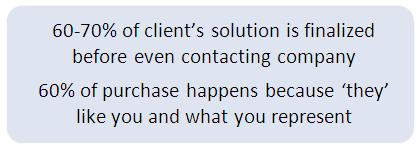
- Many prospects ‘trawl’ the web to get information
- Stopped outbound and traditional marketing such as direct mailers, email blasts and events
- Cut traditional expensive marketing, such as advertising in magazines and newspapers
- ‘Write smarter to create thought-provoking content with care
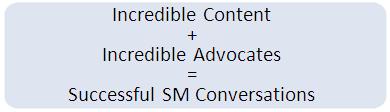
- Rather than just “tell”, good content is needed to hold a conversation
- Leverage multiple social media channels to push out your content and influence all departments
- Email marketing is very productive for Salesforce.com, as they nurture all contacts
- Nurture anyone who touches your organization in any way
- Accurate segmentation is needed otherwise spammers will come out in droves
- Investigate quickly what works; continue comparing and measuring
- Use your organization’s internal/external communication mechanisms to help the company become involved in SM
What is the biggest challenge to getting engagement and building dialogue with your social media community members? Who moderates?
- Finding SM champion(s) and creating guidelines for communicating. Even champions need coaching and guiding. Consider a partner or client to be your champion
- Finding a good topic of conversation – controversy is a great dialogue starter
- Getting middle-management to lead in SM. Senior managers should not manage social media
- Finding ways to segregate your SMB and enterprise audiences
- Coming up with questions and interesting topics that engage and get a dialogue going
- Being willing to listen and go to customer SM parties; start a party within a party, and get a party back to your ‘place’
- Being courageous, taking the conversation to next level to become a thought leader
- Not considering social media to be all about lead gen, but rather an engagement opportunity
- Appreciating that what you do is valuable; your valuable work should be about helping customer
- Changing your customer’s perception of your company by creating real content with real value to help your customer day to day
- “Social Media Around the World” a great book to read about why someone would want to engage online with you
Audience questions and answers
Who owns SM channel be it inbound or outbound? How does Marketing get involved?
- Many responses were given by the panelists about who should be managing social media:
- Marketing department — should arm social media teams to answer properly
- “Care” department — in order to ‘sell’ organization’s successes
- “Service” department — since typically it is a reflex response for damage control
- “Chief Promise Officer” – as it should be about the entire customer experience from transforming a future customer into an actual customer, who may later need service. Should be all under one umbrella. This title will be an evolution.
Are you using different instant segmentation for each client segment? How do I leverage this activity and not confuse my audience?
- Organizations are struggling with this
- Rather than having multiple FB pages for different customer segments, go with SMB content which should make sense to all for this reason some Canadian organizations also have their Canadian website catered to an SMB market
- Need to funnel social media based on content; it is better to have dialogue than not
Can you state real, concrete examples using SM that turned into a lead? And what was your worst failure?
- Buying a target market list can be wasteful; ensure your target is small and specific, with a precise call-to-action
- You need to fail to succeed
- Success:
- Conduct a study with a partner, such as Rotman School of Business and rely on a PR firm to get content out; this work was cut from budget and now done internally; completed internal study now gets out via LinkedIn groups; not their own but rather where your customers ‘hang out’ and had great conversations at 25% less than cost
- Success:
- Go where your customer are going; survey your customers about how/where they communicate and what content they find relevant
- Post out instead of just on your own website, such as on FB, Twitter, Instagram
- Consider what type of document/communication has most impact during sales cycle and what channel is most effective
- Don’t throw it all out there; use the right tool/document at the right time in sales cycle
- Success:
- Avaya has held “Evolution Shows” and Tweets for Charity exercises
- Tweeting from back stage at event; held an event where speakers were making too many hockey references. A prospect tweeted about this and this was immediately communicated to speakers
- BUY YOUR HASHTAG before your competitor does
- Success:
- Owned content: created by organization and posted on organization’s web/blog/ Twitter; e.g. your corporate video
- Earned content: have viewers share and/or recommend your content
- Paid content: if earned content is successful, amplify content by purchasing targeted advertising
- Failure:
- CLOUD-related content was distributed with nothing compelling to say and no internal advocates
Panelists
- Rob Daleman, Director of Marketing, Avaya Canada
- Paul McDevitt, Director, Enterprise Marketing, Cisco Canada
- Jason Fiorotto, Director, Americas Demand Generation & Marketing Operations – HP Software, Hewlett-Packard
- Renny Monaghan, Chief Marketing Officer, Salesforce.com Canada
- Linda Craenen, Director, Business Marketing, TELUS

Great session and a very helpful report, thank you. My contribution is to remind folks that social media is just a tool box, albeit a complex one, and that the tool box keeps changing. The important issue is to start SM discussions with the business plan and evolve from there.
I do not, and will not join most insecure SM organizations, which are repeatedly compromised , hacked, and private information made public. Our business has grown beyond our wildest dreams, without the SM. We will continue to do so, with our present, successful methods, namely great customer service, which leads to referrals, and a website, which supplies adequate information to prospective clients. FYI, more and more of my clients, suppliers and associates are “dropping out” from the SMs.